




Anatomy of a Counterfeit, No. 6:
The Second Life of Counterfeits
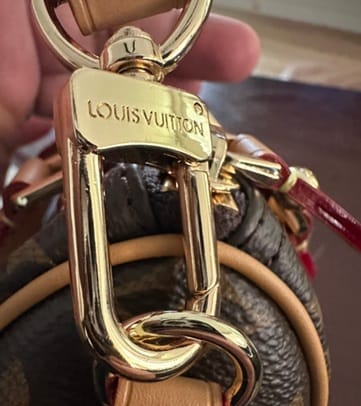
In the first installment of our series, we examined the physical reality of a $50 replica modeled after the iconic Louis Vuitton Speedy Nano—a bag with an official retail price starting at $1,500.
Today, we dive deeper into the structure of the counterfeit market and analyze the mechanics behind their “second life” in the digital ecosystem.
The Delight of the Intentional Buyer
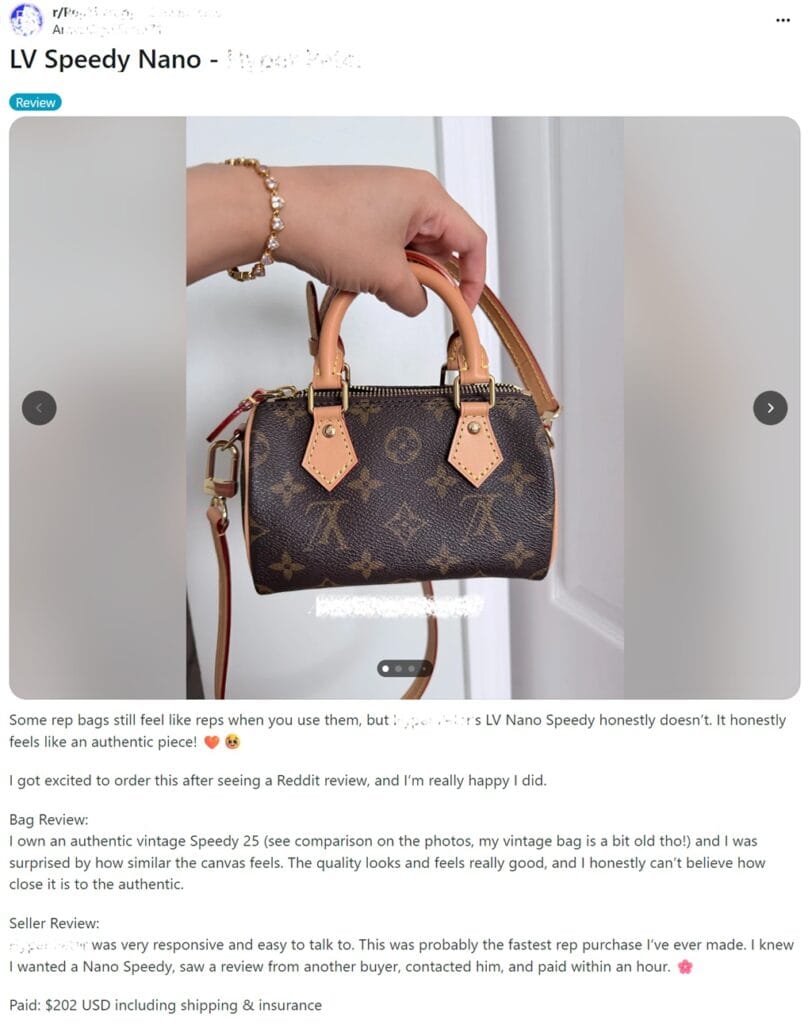
For a specific segment of consumers, purchasing a $50 fake brings no embarrassment—only satisfaction. On online forums, dedicated subreddits, and social media platforms, buyers unashamedly flex their latest “finds.” They trade seller links, critique stitching precision, and celebrate what they perceive as successfully outsmarting the system.
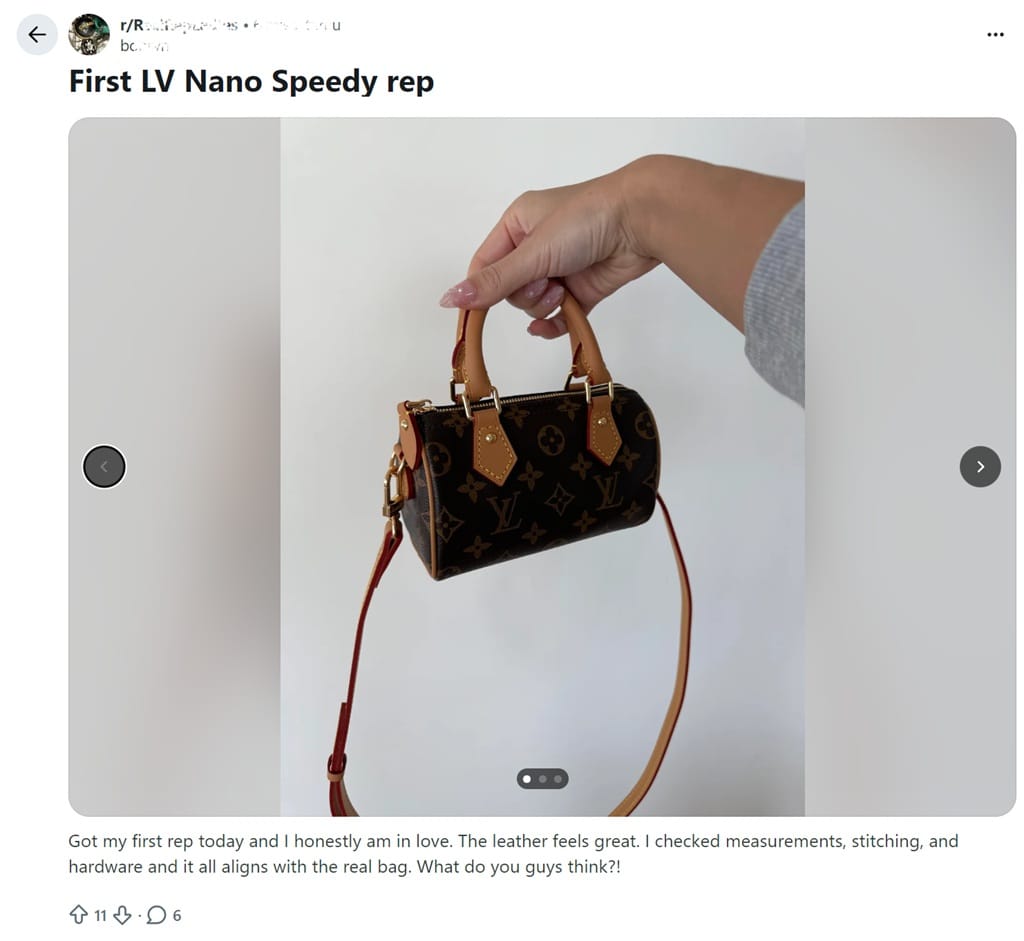
The Virtual Underground: "Trusted" Replica Sellers
Contrary to popular belief, the counterfeit market is not restricted to sketchy websites with obscure domain extensions. A sophisticated ecosystem of specialized dealers and intermediary storefronts has emerged.
Buyers often turn to so-called “trusted sellers” curated within niche communities. However, this illusion of security comes at a premium: for a replica costing $50 to produce, these sellers charge upwards of $200. The buyer walks away believing they secured a superior “AAA-grade clone,” oblivious to the 400% markup.
The Secondary Market and Unwitting Victims
While intentional buyers are fully aware of their purchase (deceiving only their social circles with manufactured status), a far more malicious scheme unfolds on the secondary market.
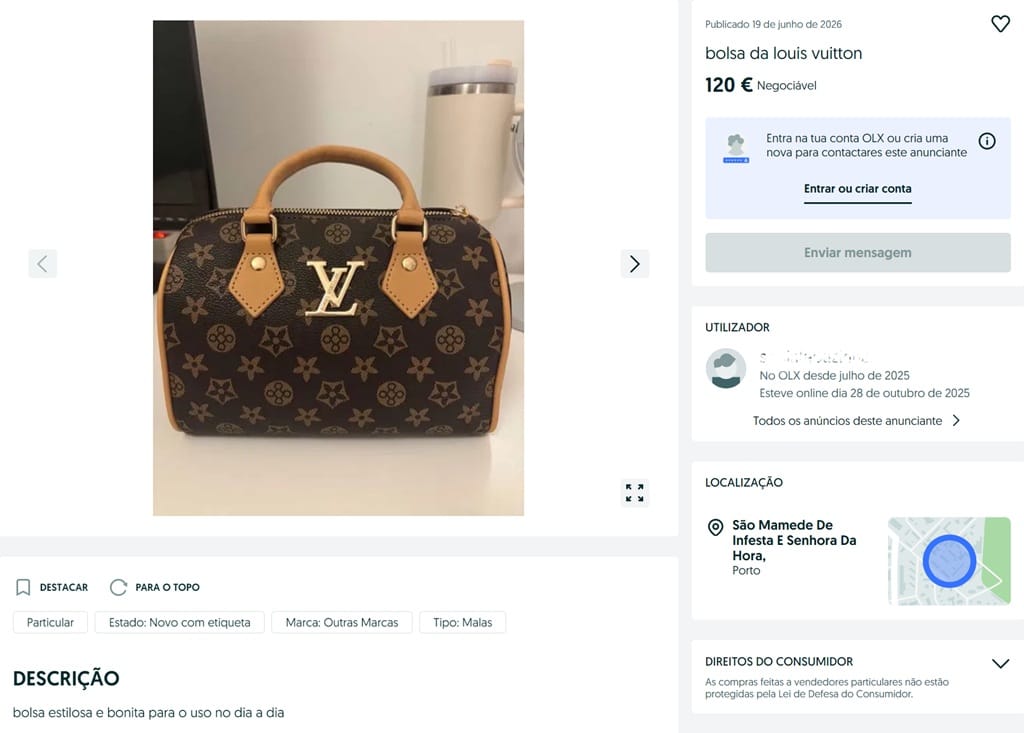
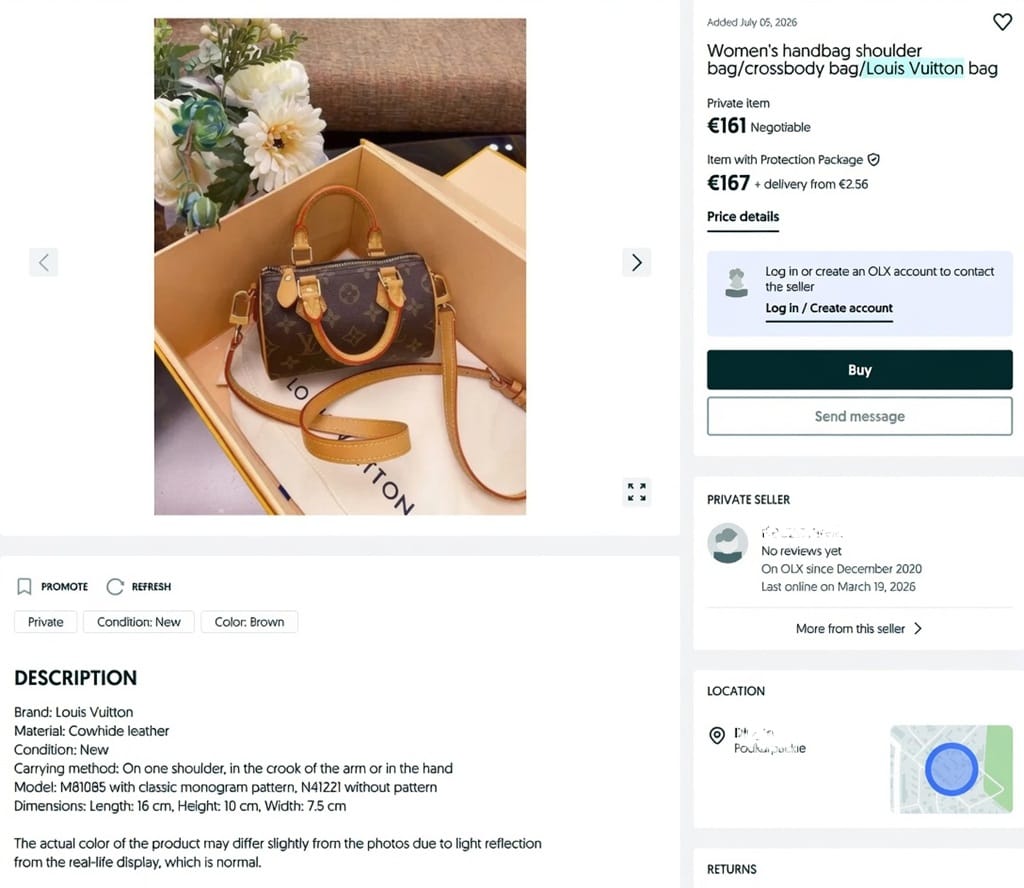
Resale portals and classified ad sites are flooded with listings targeted at an entirely different demographic: consumers seeking genuine luxury at a accessible price point.
Fraudulent sellers rely on a predictable roster of deceptive narratives:
- “Unwanted gift from an ex-partner”
- “Urgent closet liquidation”
- “Inherited from a relative abroad”
Given the sheer volume of these listings, one might assume a global generation of grandmothers left behind thousands of pristine luxury handbags.
The "Deal of a Lifetime" Trap
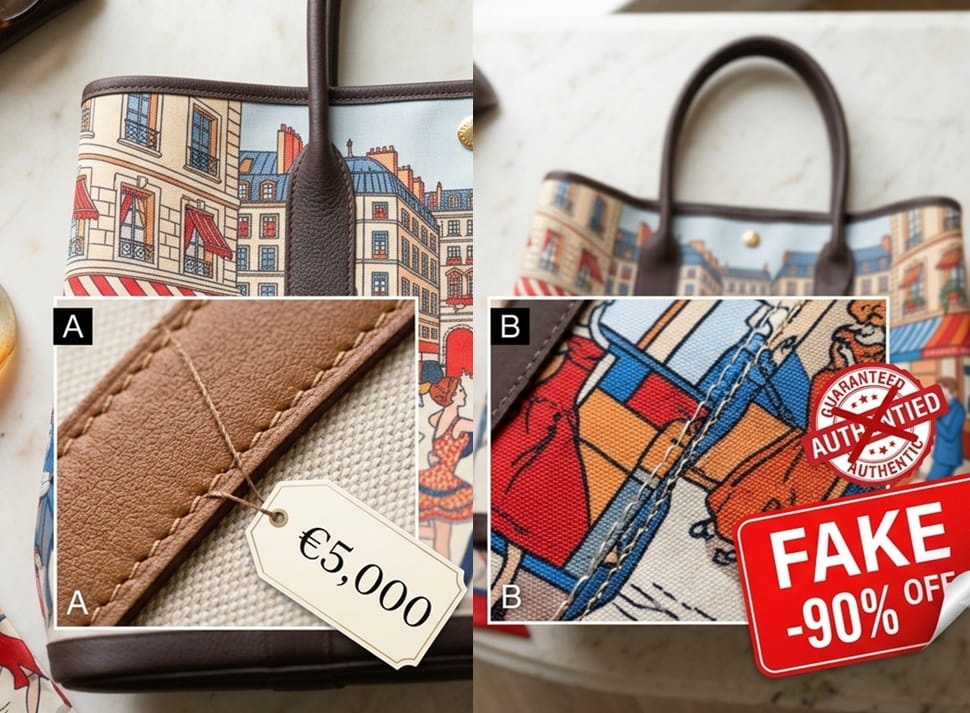
Scammers effortlessly exploit the psychological lure of a bargain. To an experienced luxury authenticator, a price tag dropped from €1,500 down to €160 immediately signals a counterfeit. However, to an average consumer without domain expertise, €160 for a pre-owned designer item does not raise red flags—it looks like a once-in-a-lifetime deal.
Top-Tier Fraud: Mimicking Retail Pricing
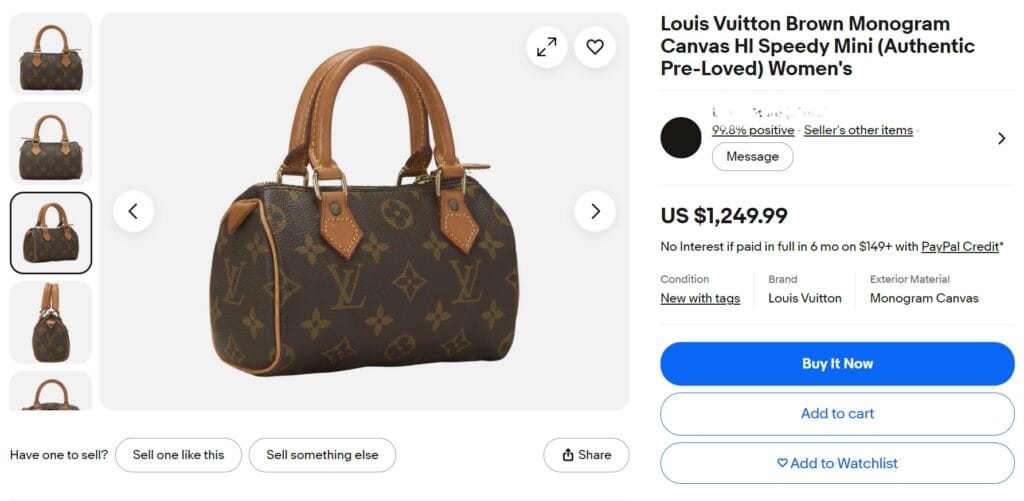
At the apex of this predatory chain are bad actors operating with total intent to defraud. These sellers list counterfeits at prices just slightly below official retail value—ranging from $1,200 to $1,400—framing the item as “like new,” “display model,” or “carried once.”
Even as major e-commerce marketplaces deploy automated anti-fraud algorithms, the prospect of a multi-thousand-percent profit margin continuously attracts malicious sellers who flood these platforms with fresh supply.
The Financial Reality: A buyer hoping to save $100 or $200 ends up losing thousands, having paid near-full price for a low-grade item worth barely $50.
Insights Summary
Insights Summary: Who Wins and Who Loses?
| Ecosystem Actor | Investment / Cost | Resale Price | Financial Impact |
| Counterfeit Factory (China) | $5 – $10 | $50 | +$40 Profit (Mass-scale manufacturing margin) |
| Middleman / Replica Dealer | $50 | $200 | +$150 Profit (Markup for access & fake curation) |
| Scammer / Fraudulent Reseller | $50 | $1,000 – $1,500 | +$950 to +$1,450 Profit (Extreme illegal return) |
| Brand Owner | — | — | Direct Loss (Stolen sales volume) & Reputational Damage (Inferior quality in circulation) |
| Deceived Consumer | $1,000 – $1,500 | — | Total Loss (Capital lost with zero access to true heritage & quality) |